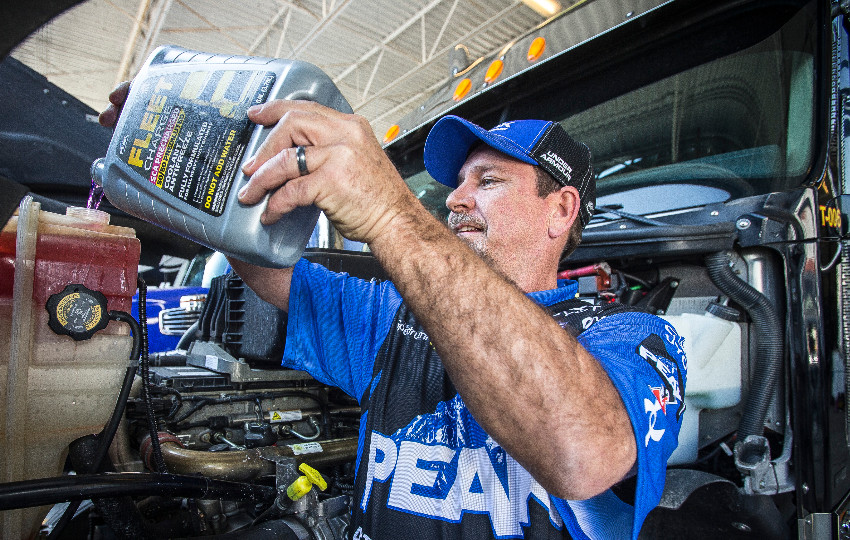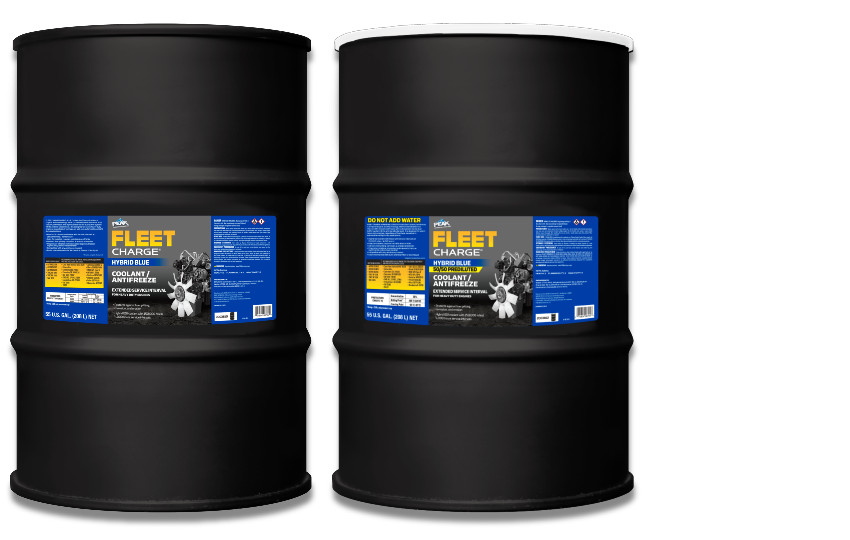
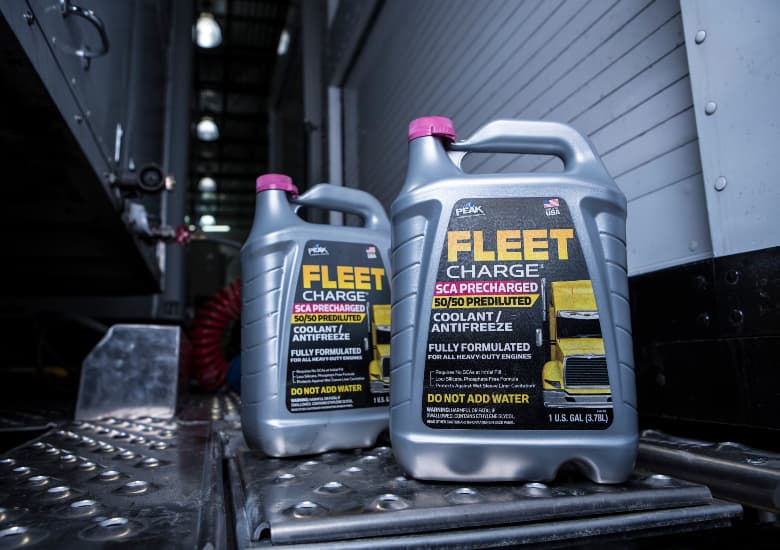
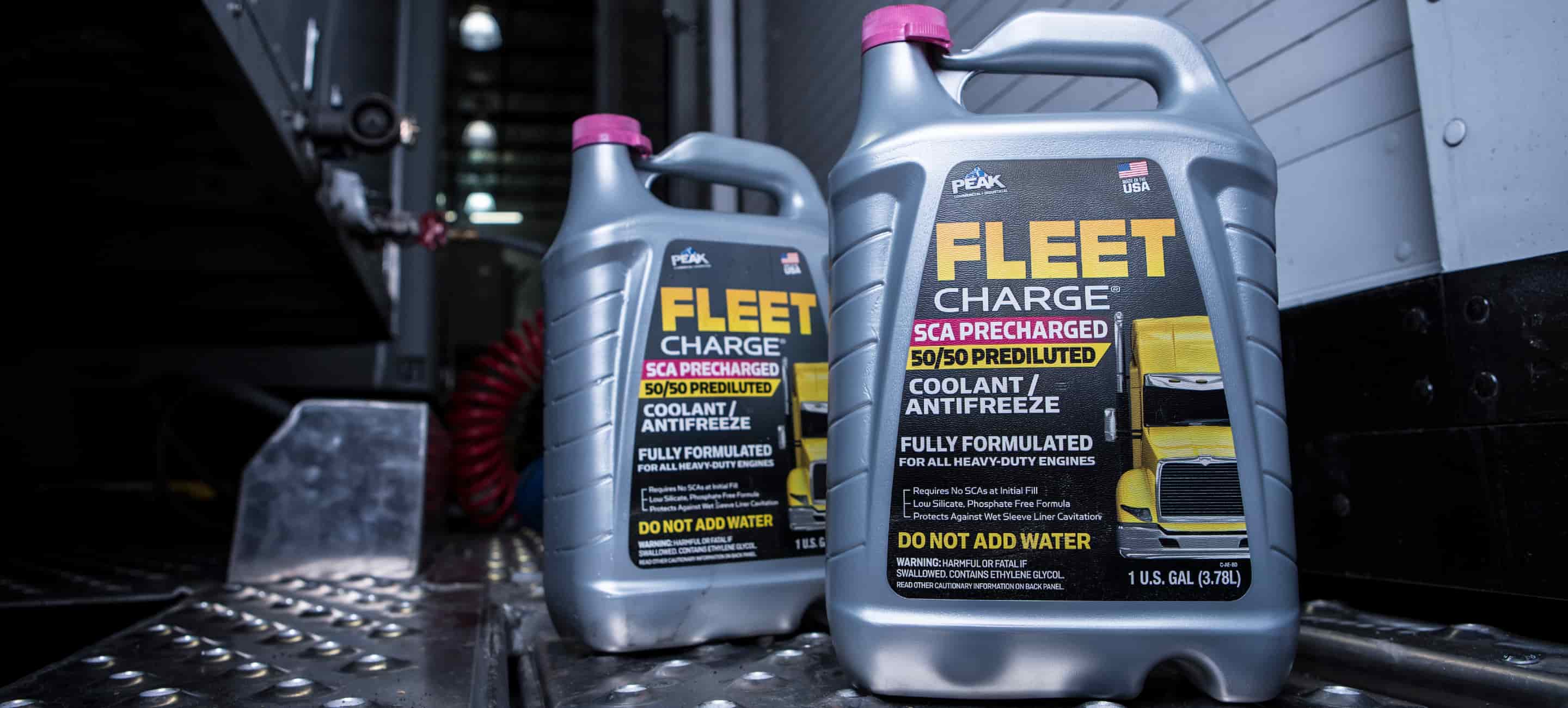
- Fleet Charge
- Fleet Charge 50/50
- Final Charge

- Fleet Charge
- Fleet Charge 50/50
- Final Charge
- Final Charge 50/50


"Over 40% of diesel engine downtime is coolant related. Have you experienced any these problems?"


Problems with Conventional "Mixed" Coolants
in Heavy-Duty Applications

FleetCharge® fully formulated coolant eliminates the problems associated with the use of conventional Heavy-Duty Coolants. The first coolants used in trucks were very similar to automotive coolants. As heavy trucks became more powerful and engineers learned to utilize the energy generated by diesel engines more efficiently, the advancing technology of truck engines required changes in coolant chemistry. A new vehicle, or one being serviced, received an “initial fill coolant” that had to be prepared by mixing half low-silicate, heavy duty antifreeze[1] and half purified water[2] to result in a properly pre-mixed engine coolant - but the pre-mixed coolant is not ready for use! The coolant still required a “pre-charge” of a supplemental coolant additive (SCA) added to it.  The SCA pre-charge is typically added at 3.0%, by volume. SCA’s contains additives not included in the low-silicate antifreeze, such as nitrite, that are essential to trouble-free operation of diesel engines. Furthermore, SCAs that meet ASTM specifications must be capable of protecting a coolant system, at recommended dose, all by themselves. As a result, there is a duplication of some of the inhibitors in the antifreeze. When service technicians continuously add SCAs to a conventional coolant, a saturation point is reached and problems develop.

Problems experienced include:

  1. Precipitation, or drop out, of inhibitors, especially silicate and phosphate.
  2. Over concentration of SCA chemicals.
  3. Premature water pump failures.
  4. Damaged cylinder liners.
  5. Damaged radiators.

One of the first and still most common problems that heavy duty technicians observe is “green goo” or, more technically, silicate drop-out. This results from using an automotive (light-duty) antifreeze in heavy-duty trucks or excessive addition of supplemental coolant additives. It may also be caused by using more than 50% antifreeze in the cooling system. As a coolant continues in service, routine addition of chemicals, called supplemental coolant additives, is necessary. Typically the SCAs are added at 15,000 to 20,000 mile intervals. Changing the coolant at 200,000 miles or 2 years was also specified. Over concentration sometimes resulted from not changing the coolant while continuing to add SCAs. Premature water pump failure and radiator damage were symptoms of excessive SCAs in the coolant. Frequently, the reverse situation was observed. Drivers and mechanics often “topped off” coolant systems with plain water or the wrong antifreeze, diluting the SCA concentration. Wet sleeve cylinder liner cavitation and freezing damage resulted from coolant weak in SCAs or glycol. The previous system was plagued by opportunities for human error.

FleetCharge fully formulated coolant eliminates these problems because it’s fully-formulated technology includes an optimally balanced SCA technology and can be mixed with the drinking water from city water systems. Most of the problems observed with the conventional antifreezes resulted from improper maintenance practices. 

  • Fleet Charge is fully formulated with a high-quality Supplemental Coolant Additive (SCA).

  • Fleet Charge eliminates the need for SCAs at initial fill and when topping off.

  • Fleet Charge contains nitrite for superior wet sleeve liner cavitation protection.

  • Fleet Charge’s phosphate-free formula reduces the risk of scale and meets Detroit Diesel requirements for a phosphate-free coolant.

  • Fleet Charge’s low silicate and low total dissolved solids formula prevents drop out and gel.

  • Fleet Charge, in combination with Penray’s Need-Release SCA filter, is a fill-for-life coolant.

  • Fleet Charge has the advantage of lower dissolved solids, improved water pump life and complete compatibility with conventional antifreezes/coolants.

  • Fleet Charge is recommended for use in all light, medium and heavy-duty vehicles, simplifying fleet maintenance procedures.

  • Fleet Charge meets ASTM D-6210, the specification for a fully formulated coolant for use in heavy duty applications.

  • Fleet Charge meets TMC RP 329, the specification for a fully formulated coolant which does not require a SCA pre-charge to be added before use in heavy duty engines.


1] “Low Silicate Heavy Duty Engine Coolant” is defined by ASTM specification D 4985. A common example was the public formulation known as GM 6038-M, which is now obsolete but still commonly referenced. Other mixtures are possible from 33% antifreeze to 67% antifreeze.


[2] Purified water such as distilled or deionized water, in the real world, is hardly ever used, but hard water from drinking sources can cause serious performance problems.


home I  articles I f.a.q. I resource page I contact us

Fleet Charge 2007. All rights reserved.                  Terms and Conditions